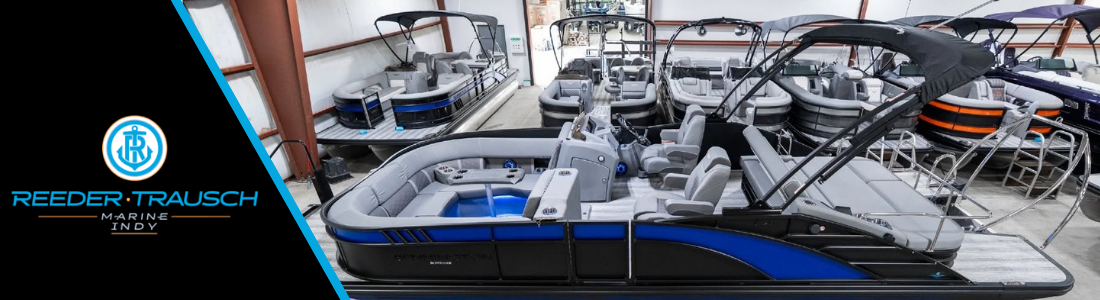
Walking into a boat dealership for the first time can feel like ordering at a restaurant where the menu is written in another language. Tubes, tritoons, deep-V hulls, horsepower ceilings. Our job is to translate all of that into something that sounds like a normal Saturday on the lake.
- The first conversation covers how your family spends time on the water, and the boat suggestions follow from there.
- Our showroom carries pontoons, aluminum fishing rigs, and fiberglass runabouts so you can compare hull types in one stop.
- Every purchase includes on-the-water training that covers ramp backing, docking, and loading the trailer.
It Starts With a Few Questions About Your Weekends
We ask questions before we point at anything on the lot. How many people ride along on a typical trip? Is the goal to fish at sunrise, pull kids on a tube, or drift around with a cooler and a good playlist? Will you trailer to Monroe and Lemon, or keep a boat closer to home at Geist or Morse?
Those answers narrow things fast. A family of six who tows tubes every weekend wants something very different from an angler chasing walleye alone at 5 a.m. Once we know how you plan to spend a Saturday, the list of boats worth walking out to see usually shrinks to three or four.
Aluminum, Fiberglass, or a Deck You Can Walk Around
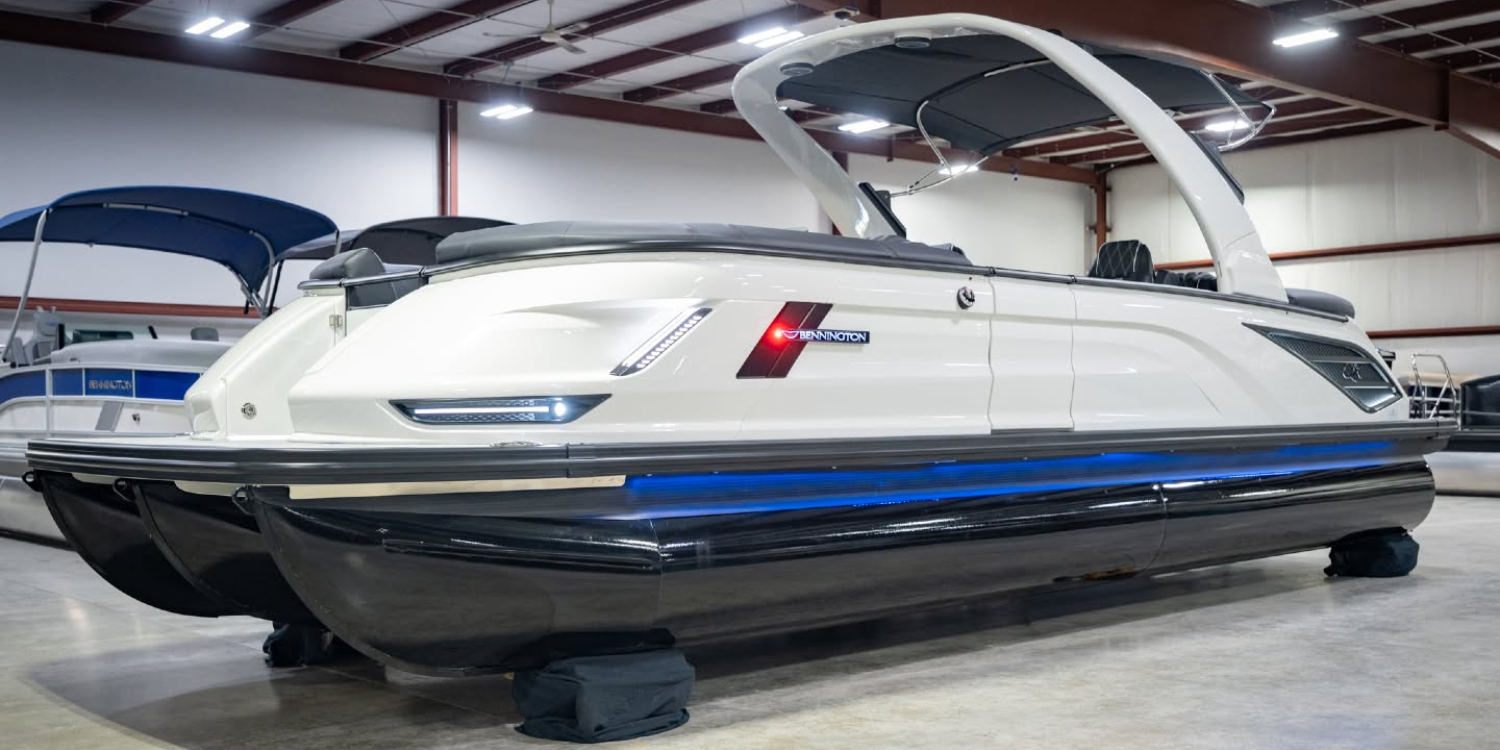
Three basic shapes cover most of what people are after. Aluminum fishing boats from Lund stay light and take a beating. They tow easily behind a mid-size SUV. Deep-V hulls cut through chop, and the layouts are built around rod storage and livewells. Fiberglass runabouts from Crownline lean toward speed and sun, with bow seating and big swim platforms. Pontoons and tritoons from Bennington hand you the most deck space per foot. That matters a lot when twelve people show up expecting a seat.
How the Bennington Series Levels Stack Up
Bennington splits its pontoon lineup into five series. The gaps between them come down to length, how many people you can carry, the horsepower ceiling, and how much of the build you get to spec yourself.
Financing and Trade-Ins Without the Guesswork
Most buyers finance, and marine loans work a little differently than car loans. Terms run longer. Lenders also look closely at the boat itself. Our finance team runs numbers on two or three boats at once, so you can see the monthly gap between a 22-footer and a 24-footer. Sometimes the bigger deck costs less per month than people expect. Other times it doesn't, and you'd rather know that before you fall for a layout.
Already own something? Send us the details, and we'll talk trade. Well-kept aluminum hulls, in particular, tend to hold their value on the used market.
The Ramp Lesson That Comes With Every Boat
Buying the boat is the easy half. Backing a trailer down a crowded ramp on a July morning while six strangers watch from the dock is the hard half. That's why every boat we sell comes with on-the-water training. We show you how to back down the ramp, approach a dock, and tie up without drama, and load the boat back onto the trailer. First-time owners tell us that one afternoon saves them an entire season of frustration.
Getting Ready for Your First Season on the Water
Give yourself room to shop. Winter and early spring are the calmest stretches to ask questions and study layouts. Bring the family along. Sit in the seats, open the storage doors, and figure out where the cooler and the tow rope will live. Then think past the sale. Storage, winterization, and service start to matter more with every year you own a boat.
Come See the Lineup at Reeder-Trausch Marine Indy
We keep a wide mix of new and pre-owned boats on the lot. Our sales, service, parts, and finance teams all work under one roof, so you're not bouncing between businesses to get on the water. Ask us anything, twice if you want. Buying a boat isn't an everyday purchase for most folks. We'd rather answer a pile of questions now than watch you second-guess the choice in June. Stop by, walk the rows, and let us match a hull to the way your family really spends time on the water.